

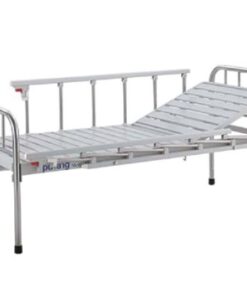
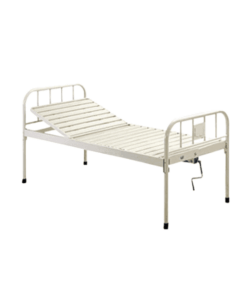
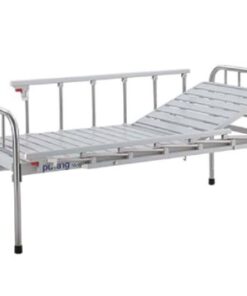
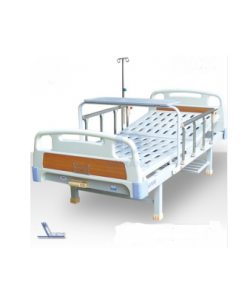
An affordable solution for private home use with its adjustable backrest and adjustable leg section.
This bed is ideal for patients who have difficulty getting in & out of bed.
Includes removable aluminum guardrails & mattress.
Here’s a comprehensive list of various types of beds used in hospitals or medical settings, along with their uses:
1. General Hospital Bed
- Use: For general patient care in hospital wards. These beds can be adjusted for the patient’s comfort and ease of care.
2. Intensive Care Unit (ICU) Bed
- Use: Equipped with advanced features like multiple positioning options, integrated scales, and monitoring systems, these beds are used for critically ill patients who require constant monitoring and specialized care.
3. Bariatric Bed
- Use: Designed for overweight or obese patients, these beds are larger and sturdier, with a higher weight capacity and additional support features.
4. Pediatric Bed
- Use: Specifically designed for children, these beds are smaller and often come with side rails for safety. They may also have playful designs to make the hospital experience less intimidating for young patients.
5. Maternity Bed
- Use: Used in labor and delivery rooms, these beds can be adjusted to facilitate childbirth and provide comfort during labor. They often have features like removable foot sections and the ability to convert into delivery chairs.
6. Birthing Bed
- Use: Specialized for the birthing process, allowing for various positions to aid in delivery, including a fully reclined position for the mother.
7. Geriatric Bed
- Use: Designed for elderly patients, these beds offer extra support and safety features, including easy adjustment mechanisms and side rails.
8. Surgical Bed
- Use: Also known as operating tables, these beds are used in operating rooms and can be adjusted to various positions to provide optimal access to the surgical site.
9. Rehabilitation Bed
- Use: Used in rehabilitation centers, these beds assist in physical therapy and rehabilitation exercises. They often include features like trapeze bars and additional supports.
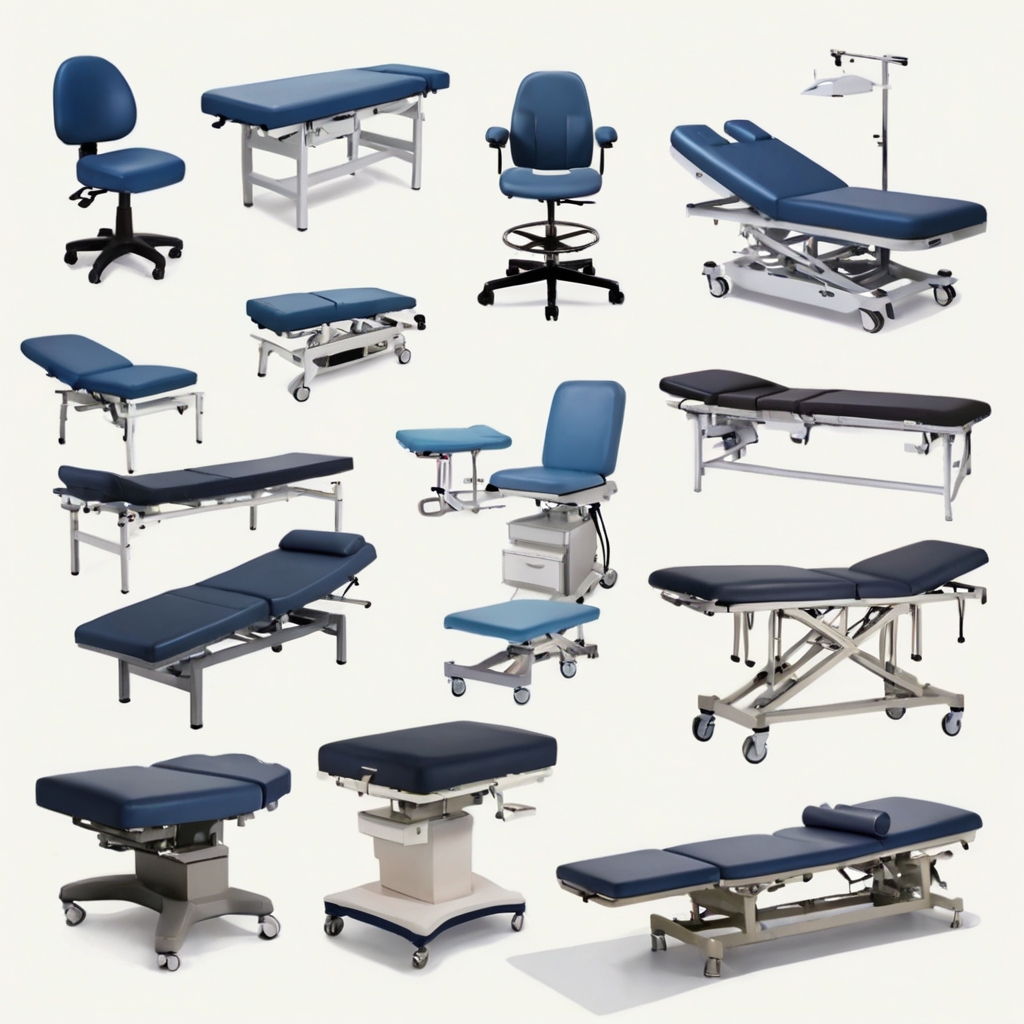
10. Examination Bed
- Use: Found in examination rooms, these beds are used for routine check-ups and medical examinations. They are simple, adjustable, and may include stirrups for gynecological exams.
11. Stretcher/Gurney
- Use: Mobile beds used for transporting patients within the hospital, especially from emergency rooms to wards or surgical units.
12. Air Fluidized Bed
- Use: For patients with severe burns, pressure ulcers, or skin conditions, these beds minimize pressure and shear forces by using a fluid-like medium of silicone-coated beads.
13. Low Bed
- Use: Designed for patients at risk of falling, these beds can be adjusted to a very low height to minimize injury from falls.
14. Crib/Cot
- Use: For infants, these are smaller beds with high sides to prevent the baby from falling out.
15. Psychiatric Bed
- Use: Designed for psychiatric units, these beds are typically low to the ground and may have additional safety features to prevent self-harm.
16. Traction Bed
- Use: Used for patients requiring skeletal traction, often for fractures, these beds come with frames and pulleys to support traction equipment.
17. Electric Bed
- Use: These beds have electric motors for easy adjustment of the bed’s height, head, and foot sections, improving comfort and convenience for both patients and caregivers.
18. Manual Bed
- Use: These beds require manual adjustment using cranks or levers, often found in settings where electricity is limited or for budget-conscious facilities.
19. Low Air Loss Bed
- Use: Designed to prevent and treat pressure ulcers, these beds have air-filled cells that help distribute pressure evenly across the patient’s body.
20. Circo-electric Bed
- Use: Used for patients with spinal injuries or severe burns, this bed can rotate the patient to different positions without moving them manually, reducing the risk of further injury.
Each type of bed is designed with specific patient needs and medical situations in mind, providing tailored support and enhancing the quality of care in hospital settings
Related products
Hosp wear
R15,466.00 ex VAT
Hosp wear
R2,183.00 ex VAT
Hosp wear

Hosp wear
Hosp wear

Hosp wear
R240.00 ex VAT
Hosp wear
R1,926.00 ex VAT
Hosp wear